
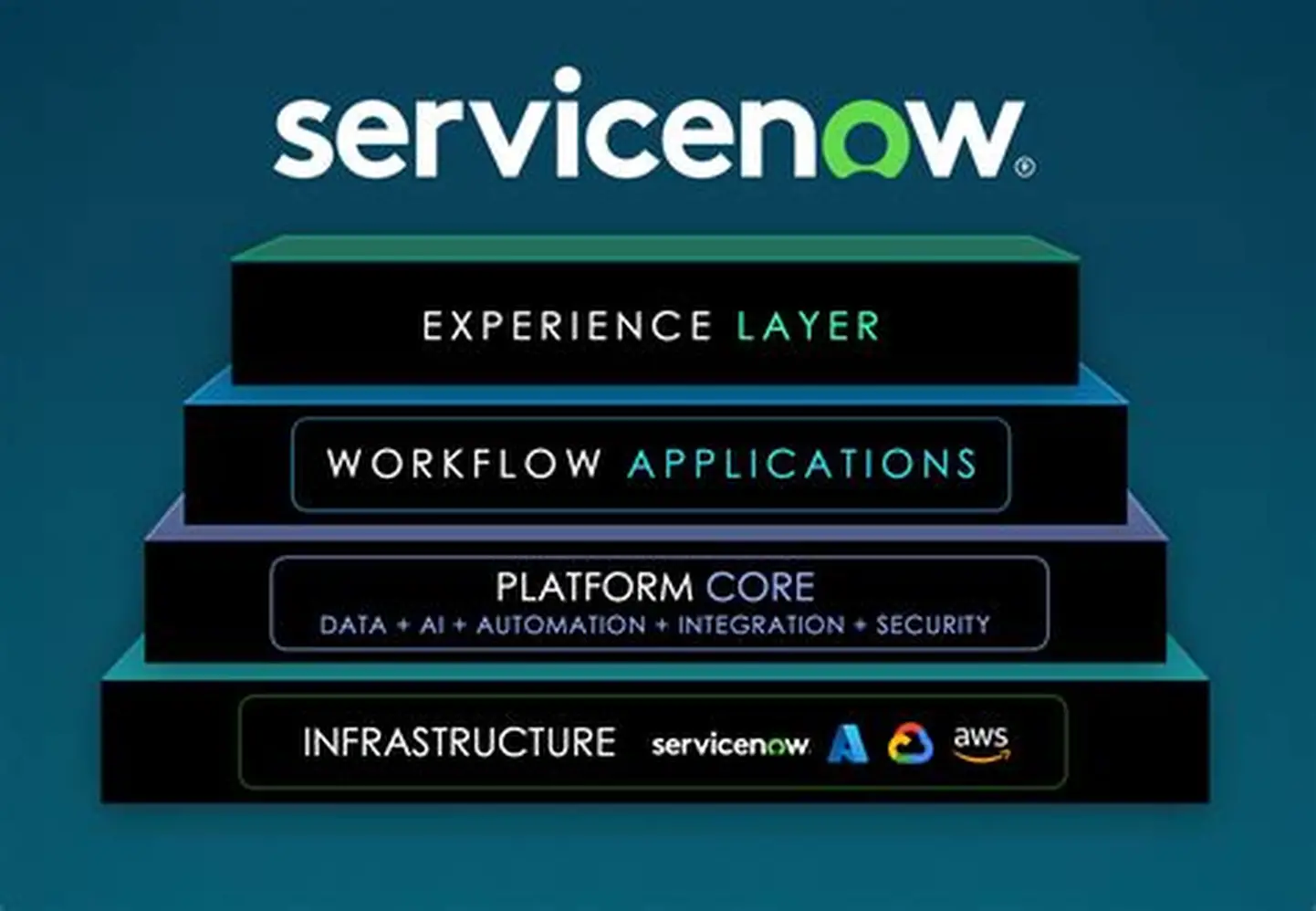
If you are exploring a career in IT, you have probably heard the name ServiceNow. It has become one of the leading enterprise platforms used by organizations to manage IT services, employee services, customer operations, assets, security, and business workflows.
But what exactly is ServiceNow, and why are so many companies looking for ServiceNow professionals?
Let’s understand it from the beginning.
What Is ServiceNow?
ServiceNow is a cloud-based enterprise platform that helps organizations manage and automate their business and IT processes.
Instead of using separate applications for incidents, employee requests, approvals, assets, customer issues, and workflows, organizations can use ServiceNow to bring many of these processes onto a single platform.
For example, when an employee’s laptop stops working:
Employee → Service Request/Incident → IT Support → Assignment → Resolution → Notification → Closure
ServiceNow can automate and track this entire process.
Why Do Companies Use ServiceNow?
Large organizations handle thousands of requests every day.
For example:
- Employees report IT issues
- Customers raise support cases
- Managers approve requests
- HR handles employee queries
- IT teams manage hardware and software
- Security teams investigate incidents
- Infrastructure teams monitor applications and servers
Managing all of these processes manually can be difficult.
ServiceNow helps organizations:
- Automate repetitive tasks
- Standardize business processes
- Track requests and cases
- Manage approvals
- Improve employee and customer experiences
- Monitor service performance
- Integrate different enterprise systems
- Generate reports and dashboards
What Is ITSM in ServiceNow?
ITSM stands for Information Technology Service Management.
ITSM is one of the most widely used areas of ServiceNow.
Common ITSM processes include:
Incident Management
Used to restore normal service as quickly as possible when an issue occurs.
Example:
An employee cannot connect to the company’s VPN.
Problem Management
Used to identify and eliminate the underlying cause of recurring incidents.
Example:
Hundreds of employees repeatedly experience VPN failures.
Change Management
Used to control changes to IT infrastructure and applications.
Example:
A company wants to deploy a new database version into production.
Request Management
Used to manage employee requests.
Example:
An employee requests a new laptop.
Service Catalog
Provides a centralized place where employees can request IT services.
Major ServiceNow Modules
ServiceNow is much larger than ITSM.
Some important areas include:
ITSM
IT Service Management
- Incident Management
- Problem Management
- Change Management
- Request Management
- Service Catalog
- Knowledge Management
- Service Level Management
HRSD
Human Resources Service Delivery
Used to manage employee services and HR processes.
Examples:
- Employee onboarding
- Employee offboarding
- HR cases
- HR services
- Employee Center
- Lifecycle Events
ITOM
IT Operations Management
Used to manage and monitor IT infrastructure.
Examples:
- Discovery
- CMDB
- Service Mapping
- Event Management
- Operational intelligence
ITAM
IT Asset Management
Used to manage the lifecycle of IT assets.
Examples:
- Hardware Asset Management
- Software Asset Management
- Asset tracking
- License management
CSM
Customer Service Management
Used to manage customer interactions and support cases.
GRC
Governance, Risk & Compliance
Used to manage:
- Risk
- Compliance
- Policies
- Audits
- Controls
SecOps
Security Operations
Helps organizations manage security-related incidents and vulnerabilities.
SPM
Strategic Portfolio Management
Used for managing projects, demands, resources, portfolios, and strategic investments.
How Does ServiceNow Work?
At a basic level, ServiceNow works around records, workflows, automation, and data.
For example, suppose an employee submits:
“My laptop is not working.”
ServiceNow can:
1. Create an Incident
↓
2. Determine the Priority
↓
3. Assign it to the appropriate IT team
↓
4. Start an SLA
↓
5. Notify the support team
↓
6. Track the resolution
↓
7. Notify the employee
↓
8. Close the Incident
This automation is one of the major reasons enterprises use ServiceNow.
What Is a ServiceNow Instance?
A ServiceNow instance is an individual ServiceNow environment used by an organization.
Organizations commonly maintain separate environments for:
- Development
- Testing
- User Acceptance Testing
- Production
Developers generally build and test changes before moving them into production.
What Is a ServiceNow Developer?
A ServiceNow Developer is responsible for developing and customizing solutions on the ServiceNow platform.
Typical responsibilities include:
- Creating applications
- Configuring tables and forms
- Developing workflows
- Writing scripts
- Creating integrations
- Developing Service Catalog items
- Configuring business rules
- Creating client scripts
- Implementing security
- Troubleshooting issues
- Building reports and dashboards
Important ServiceNow Development Concepts
If you want to become a ServiceNow Developer, you should understand these concepts.
Client Scripts
Used to control form behavior on the client side.
Examples:
- Make a field mandatory
- Hide a field
- Make a field read-only
- Automatically populate information
Business Rules
Used to execute server-side logic when records are inserted, updated, deleted, or displayed.
UI Policies
Used to dynamically control:
- Visibility
- Mandatory fields
- Read-only fields
Script Includes
Used to create reusable server-side JavaScript logic.
GlideRecord
Used to query and manipulate records in ServiceNow tables.
GlideAjax
Used when client-side scripts need to communicate with server-side logic asynchronously.
Flow Designer
Used to create automated workflows with less traditional scripting.
What Is ServiceNow Administration?
A ServiceNow Administrator manages and configures the ServiceNow platform.
Typical responsibilities include:
- User management
- Groups
- Roles
- ACLs
- Tables
- Forms
- Lists
- Notifications
- Reports
- Dashboards
- Service Catalog
- System configuration
- Update Sets
- Troubleshooting
ServiceNow Developer vs Administrator
| ServiceNow Administrator | ServiceNow Developer |
|---|---|
| Platform administration | Application development |
| User & role management | Scripting |
| Configuration | Custom development |
| Reports & dashboards | Integrations |
| ACL configuration | Business Rules |
| Service Catalog configuration | Script Includes |
| System maintenance | Client Scripts |
| Platform support | Custom applications |
In smaller teams, a professional may perform responsibilities from both roles.
ServiceNow Career Opportunities
ServiceNow provides several career paths.
Beginner
ServiceNow Administrator
↓
Development
ServiceNow Developer
↓
Specialization
ITSM / HRSD / ITOM / ITAM / CSM / GRC Developer
↓
Advanced
Senior ServiceNow Developer
↓
Technical Lead
↓
ServiceNow Architect
Other career paths include:
- ServiceNow Consultant
- Business Analyst
- Implementation Specialist
- Platform Architect
- Technical Architect
How to Start a ServiceNow Career?
If you are a beginner, a practical learning path can look like this:
Step 1 — Learn ServiceNow Fundamentals
Understand:
- Platform
- Applications
- Tables
- Forms
- Lists
- Users
- Groups
- Roles
Step 2 — Learn ITSM
Start with:
- Incident
- Problem
- Change
- Request
- Service Catalog
- SLA
Step 3 — Learn Administration
Practice:
- Users
- Groups
- Roles
- ACLs
- Notifications
- Reports
- Update Sets
Step 4 — Learn Development
Learn:
- JavaScript
- Client Scripts
- Business Rules
- UI Policies
- Script Includes
- GlideRecord
- GlideAjax
Step 5 — Learn Automation & Integration
Move into:
- Flow Designer
- REST APIs
- IntegrationHub
- Import Sets
- Transform Maps
Step 6 — Build Real-Time Projects
Don’t only learn theory. Build projects such as:
- Incident Automation
- Employee Onboarding
- IT Asset Request
- Change Approval
- SLA Escalation
- REST API Integration
Step 7 — Prepare for Interviews
Practice:
- Technical questions
- Scripting scenarios
- Real-time implementation questions
- Project explanations
- Troubleshooting scenarios
Is ServiceNow a Good Career Choice?
For people interested in enterprise technology, ServiceNow can be a strong career path because the platform is used across multiple business functions and supports both configuration and development roles.
However, learning only the interface is not enough to become a strong developer.
A good ServiceNow professional should combine:
Platform Knowledge + ITSM Knowledge + Scripting + Automation + Integrations + Real-Time Projects
Final Thoughts
ServiceNow is more than an IT ticketing tool. It is an enterprise workflow and automation platform that organizations use to connect people, processes, systems, and data.
Whether you want to become a ServiceNow Administrator, Developer, Consultant, or Architect, starting with the fundamentals and gradually moving into development and real-world projects is an effective approach.